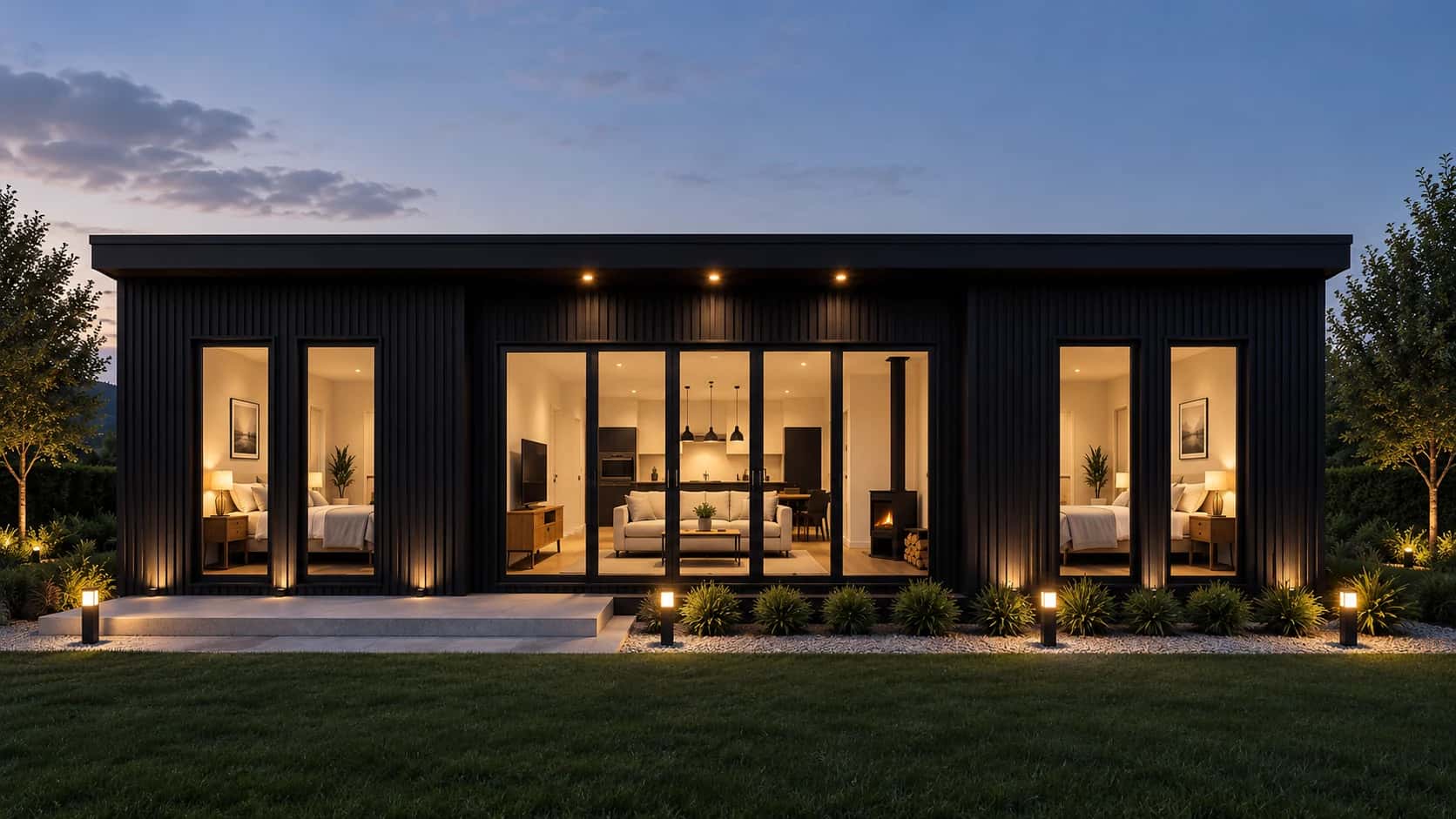
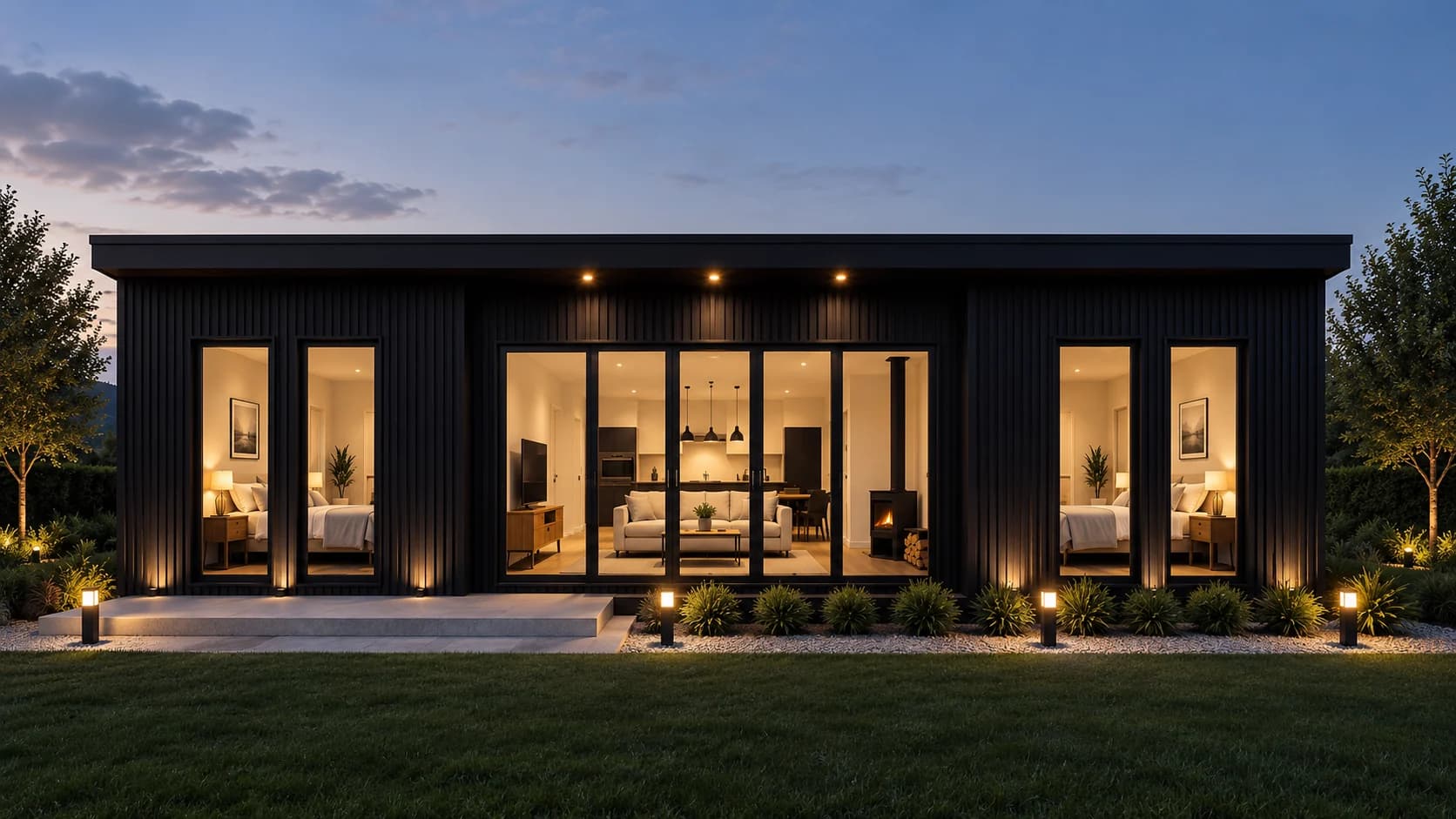
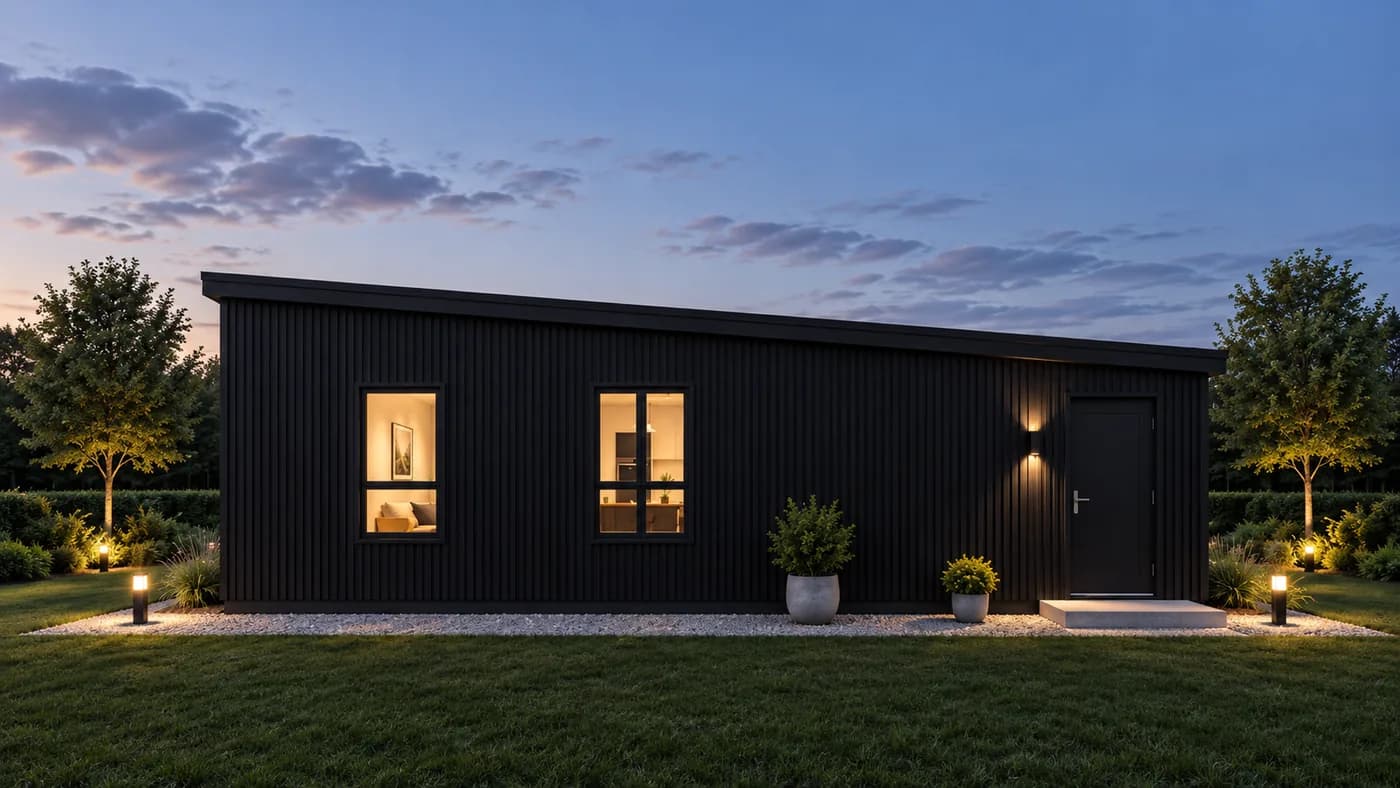
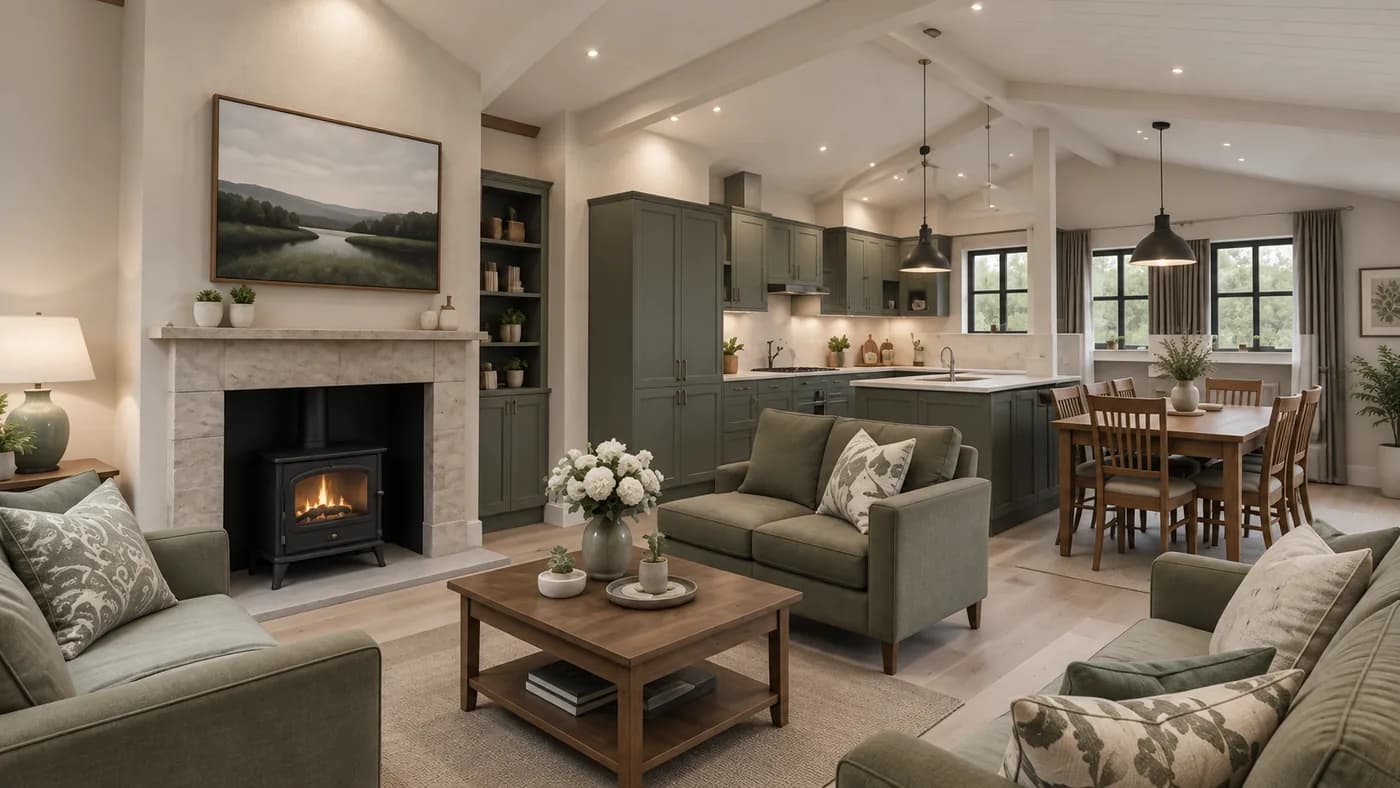
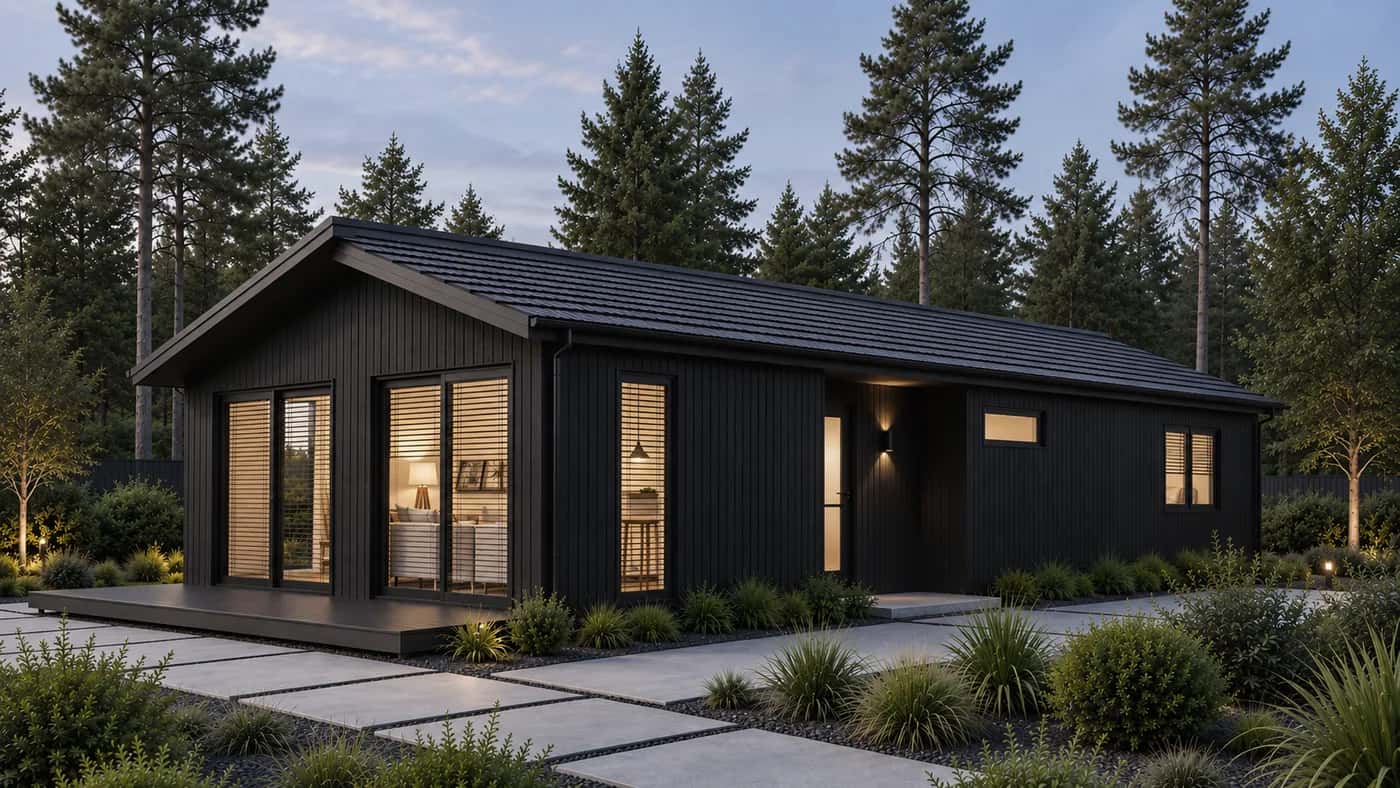
 CGI design visualisation
Warmer Inside,
Lighter on Energy.
How the SIP envelope keeps heat in, keeps running costs down and keeps buildings comfortable through all four seasons.
Three Ways the Envelope Saves Energy.
Walls, roof and floor work together as one insulated shell, so less heat escapes and less energy is needed to replace it.
Continuous Insulation
An insulating EPS core runs through walls, roof and floor, wrapping the building in one unbroken layer.
Airtightness
Precisely fitted panels limit uncontrolled air leakage, so warm air stays in and draughts stay out.
Minimal Thermal Bridging
Fewer structural breaks in the insulation means fewer cold paths for heat to escape through, when detailed correctly.
Comfort in Every Season.
A well-insulated, airtight building holds a steadier temperature. That means fewer draughts and cold spots in winter, and a calmer, more consistent internal environment all year.
Better for Operators.
For parks, venues and holiday lets, lower running costs and buildings that stay comfortable out of season support more year-round bookings.
Less Waste, Longer Life.
Panels are made in controlled factory conditions and cut to precise dimensions, which reduces waste compared with traditional on-site construction. A durable, long-life structure means the building keeps performing for years to come.
Ready for Low-Carbon Heating.
An efficient envelope can be combined with low-carbon heating and renewables, such as:
- Heat pumps
- Solar PV
- Ventilation with heat recovery
Performance Figures.
The continuous insulated core gives low elemental U-values with less heat lost through repeating thermal bridges. These are typical ranges. Actual values depend on panel thickness, insulation type and the full build-up, and are verified through project-specific calculations.
- Walls
- 0.11–0.18W/m²K
- Roofs
- 0.10–0.15W/m²K
- Floors
- 0.12–0.18W/m²K